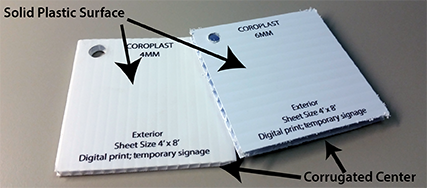
Corrugated Plastic
Coroplast is the corrugated plastic material used in many lightweight temporary signs. It is a strong fit for political signs, special-sale signs, construction site signs, directional signs for open houses, and other real estate applications. Our 6mm Coroplast is especially useful for double-sided yard signs because the print does not easily show through from one side to the other.
- 100% recyclable
- Unaffected by water
- More durable than fiberboard
- Extremely lightweight
- Won't rust, rot, mildew, or corrode
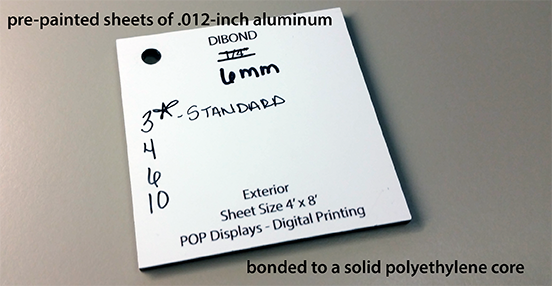
Dibond
Dibond is a rigid aluminum composite material made from two pre-painted aluminum sheets bonded to a solid polyethylene core. It offers excellent flatness, high rigidity, and roughly half the weight of solid aluminum. It is a reliable replacement for heavier rigid panels when you need a durable substrate for interior or exterior signs, exhibits, and displays.
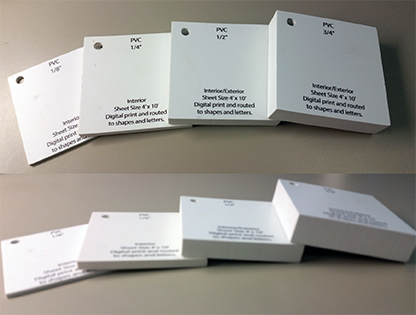
PVC Sign Materials
PVC is a durable sign substrate available in 1/8", 1/4", 1/2", and 3/4" thicknesses. The 1/4" material is a standard choice for many real estate sign panels and riders, but PVC is also useful for displays, exhibit booths, photo mounting, model making, and interior applications. It machines well, resists impact, absorbs very little water, and provides a smooth printable surface for direct print, vinyl lettering, or paint.
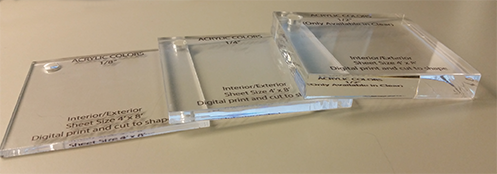
Acrylic
Acrylic is a versatile option for lobby displays, dimensional lettering, back-lit signs, and clear protective overlays. It comes in several thicknesses and can produce a polished, high-end interior look. It is long-lasting when properly maintained, though it should be cleaned carefully to avoid scratching.
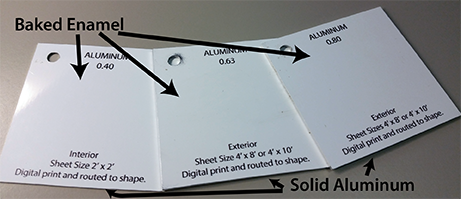
Aluminum
Aluminum in .040, .063, and .080 gauges is a standard choice for exterior signage. It is lightweight, weather resistant, and suitable for direct print or high-performance vinyl graphics. Typical uses include wall signs, construction signs, parking signs, ADA signs, school zone signs, and other regulatory applications.
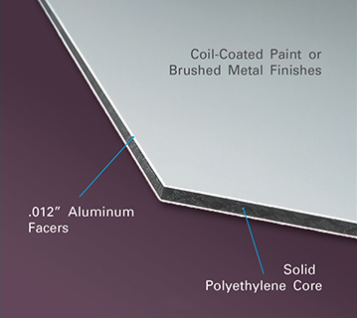
3mm ACM
3mm ACM is an aluminum composite material suited to both interior and exterior signage. It works well for mounted graphics, digital printing, and fabricated sign faces, and it can be saw cut, routed, or punched during production.
- POP and POS displays
- Exhibits and kiosks
- Interior signage displays
- Exterior signage displays
- Framing
- Window displays
- Dimensional letters
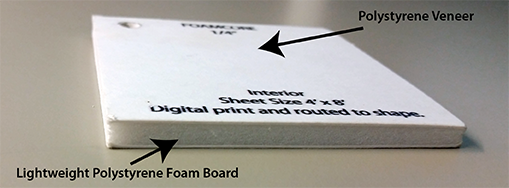
Foamcore
Foamcore is a lightweight board commonly used for mounted photo prints, framing backers, presentation pieces, and certain display graphics. It can be printed and cut to shape, which makes it useful for short-term interior signage and visual presentations. It is best suited to applications where low weight matters more than long-term weather exposure.
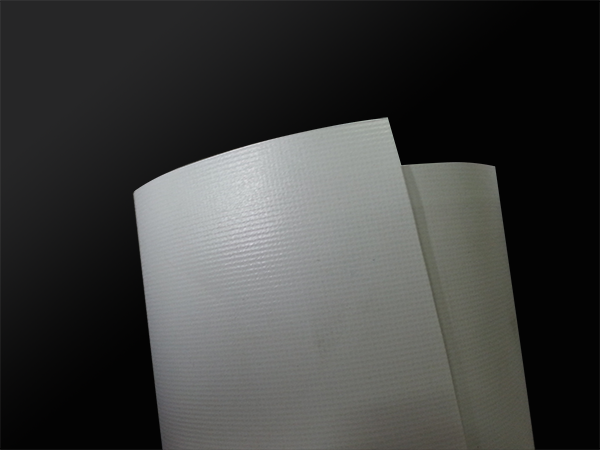
Scrim Vinyl
Our 13oz scrim vinyl is used for printed banners. The polyethylene face is reinforced with polyester cord, giving the material the strength needed for outdoor use. Paired with brass grommets and UV-resistant inks, it holds up well against wind, rain, snow, and sun.